
A Savior from Rwanda: Scholastique Mukasonga’s novel “Sister Deborah” | EUROtoday
A lady sits majestically on the termite mound beneath the coral tree. An iron rod in her hand like a scepter, she proclaims the upcoming return of Christ: “The Savior is near, and he is coming for us women – it is quite possible that he himself is a woman and not a man: she will bring us abundance. From her cloud she will scatter a seed, an imbuto, which will allow a rich harvest to sprout without the women having to hunch over their heels. The cows will be a never-ending stream of milk for all Rwandans spouses will unite ad nauseam and then embrace each other again with passion, and mothers will give birth to their children in exuberant joy.”
These are different expectations of salvation and tones than those used by the pastor. The woman who speaks like this probably belongs to his church and is under his word. But when Sister Deborah preaches, her words have their own effect and attract a female following that is constantly increasing and soon rebelling against those in power in the country. No wonder men view her with suspicion, even hostility. Because this prophetess cannot even be tamed by marriage. Even the chief, who officially and openly woos her, is clearly rejected: “I do not belong to anybody. And even when I take you as my lover one evening, you’ll by no means be my husband.”
Will the chief survive the revolt?
The scene takes place in colonial Africa in the 1930s. Rwanda, formerly part of German East Africa, is now a Belgian colony and remains peaceful. The colonial administration employs local chiefs at will to ensure peace. But again and again she loses control and resorts to the violence of war as a means of calm. The problem of the self-confident women around Sister Deborah, whose rebellious spirit threatens to escalate into political revolt, is ultimately ended by a bloody military operation.
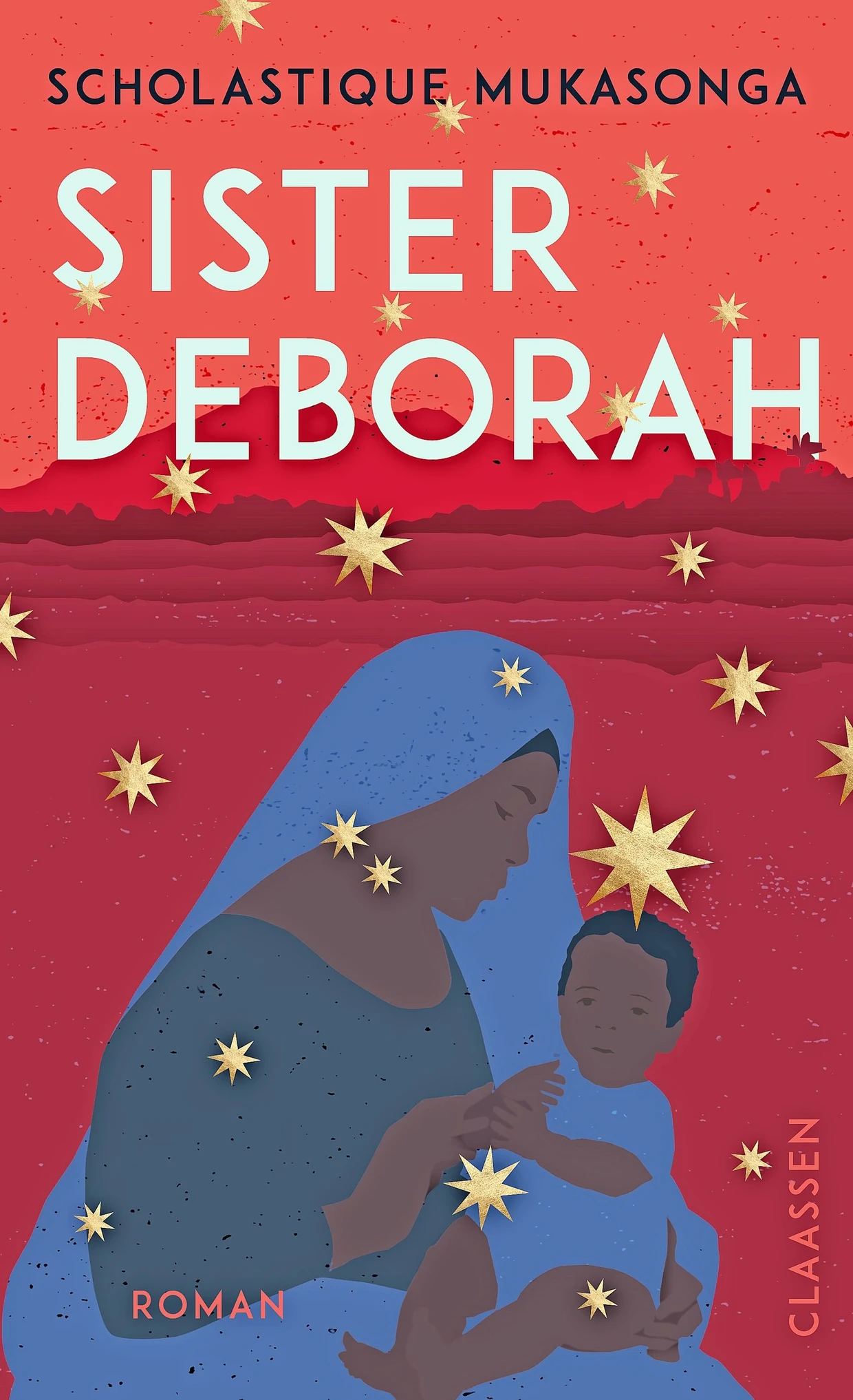
What exactly happens and whether the charismatic leader survives the attack remains unclear. The reports vary. In any case, a little later a healer who calls herself Mama Nganga appears in a Nairobi township and takes over from Deborah. Their life story, which leads from the American southern states to late colonial East Africa, is then told in some detail.
In her new novel, Scholastique Mukasonga spans very wide arcs in a limited space and tells a big story in a sequence of succinct scenes. The Rwandan-French author, born in 1959, who fled Rwanda in the 1970s and has lived in France since the early 1990s, has long since established herself as a strong narrator with a dozen titles. This time she explores a chapter from the conflict-ridden colonial and religious history of her country of origin. After autobiographically based books such as “Woman on Bare Feet” (German, 2022) in regards to the stunning destiny of her mom, she as soon as once more takes up a historic theme that she had already explored within the earlier novel “Kibogo’s Ascension” (German, 2024): the difficulties of Christian missions, that are confronted with persistent native non secular practices of their work and, albeit reluctantly, have to return to phrases with them.
She breaks away from her male representatives
In “Sister Deborah” she not only gives this constellation a feminist twist. Additional tension arises from the fact that it is a black-American Pentecostal church that is attracting attention and the hope of the Rwandan village population: These missionaries are neither Catholic nor white! Their worship service is an ecstatic spectacle with speaking in tongues and full-body baptism, and they tell of a faraway land where black people can forge their own lives and their own happiness if only they join the revival church. For this good news, Sister Deborah is the medium of transmission. On the other hand, she increasingly breaks away from her male representatives by conveying her own and other messages.
But this novel gains its tension from a subtle narrative network. First he begins with the voice of a first-person narrator named Ikirezi, who describes childhood scenes from rural Rwanda, including her formative encounters with Sister Deborah, revered by her mother as a healer and decried as a witch by her father. The first-person narrative passes almost imperceptibly into the voice of a collective, female memory and, as it progresses, it increasingly combines what is personally verified with hearsay and legend.
In the middle part of the novel, Deborah herself recounts her eventful life, conveyed by the voice that calls herself Mama Nganga. In the last third it becomes clear that Ikirezi tracked her down in the township and conducted long interviews with her in order to uncover her life story. In the meantime, Ikirezi has moved to North America and has set up a new name as an ethnology professor and expert on African religions at a renowned college. At the same time, this novel contains hints of the educational history that its own creation entails.
All of this is told in clear, powerful and sonorous sentences, wonderfully translated into German by Jan Schönherr, which are repeatedly – as can be seen in the opening quote above – interspersed with words from Kinyarwanda. As the author herself once said, for her such words are pebbles that, like Hansel and Gretel, may show her the way to a lost home. When you read it, you follow it there with excitement, sympathy and profit.
Scholastic Mukasha: „Sister Deborah“. Roman. Translated from French by Jan Schönherr. Claassen Verlag, Berlin 2025. 176 pages, hardcover, €24.
https://www.faz.net/aktuell/feuilleton/buecher/literatur/eine-erloeserin-aus-ruanda-scholastique-mukasongas-roman-sister-deborah-110822254.html