
The skyrocketing deficit with the United States and the army business technique | Opinion | EUROtoday
We are going to have to speak to Spain,” Donald Trump said yesterday in Davos. “I do not know what is going on. I acquired commitments from all NATO allies (to speculate 5% of GDP in protection). Everyone, besides Spain.” Perhaps the explanation lies in the trade balance between the two countries, which makes the White House’s tariff threat more innocuous here. Foreign trade data for the first eleven months of last year indicate that Spain increases total imports by 4.5%, those from the United States by 7.8%, and overall exports rise by 0.6%, despite the 8% drop in sales to Trump’s country. This leads to Spain’s trade deficit grow by 42%, up to 51,481 million, of which 12,819 million (+35%) are with the United States.
These numbers show that Spanish businessmen have known how to look for other markets to replace the lower purchases by Americans, which is why, although less is sold to the United States, overall exports do not fall. The deficit in trade with this country makes tariffs a short-range weapon to intimidate Spain, unlike what happens with the other large economies of the European Union (Germany, France and Italy), which have high trade surpluses with the American superpower. In fact, product sales to the United States do not even account for 5% of Spain’s total exports, but they exceed 20% for the EU average.
Perhaps this justifies that President Pedro Sánchez has been among the most forceful in not assuming Trump’s demands for military spending. All this regardless of ideological issues and the fact that Spain needs to dedicate many resources to other sectors. It is enough to follow the open debate on the situation of railway infrastructure following the recent accidents.
The firmness with which this Government is leaving US parent companies out of military spending is especially striking. This week, a report was presented that indicates that 90% of the defense procurement awards made in 2025 went to four companies, Airbus, Indra, Navantia and Escribano, the first three participated by the State and the fourth with an unfinished integration plan in Indra. “Historic Spanish companies in the sector, such as Urovesa, Instalaza, Santa Bárbara, Oesía and Sapa, have together received 2.8% of the expenditure,” concludes the aforementioned study, prepared by Opina 360.
This public opinion analysis company belongs to Iván Redondo, former Secretary of State for Communication under Pedro Sánchez and advisor, among other companies, to Santa Bárbara, a company belonging to General Dynamics (United States) since it was sold to him by the Spanish State in 2001. This Redondo-Santa Bárbara link shows the opportunity of a study that should not be disregarded, since it has been prepared with data from the State Contracting Portal, but it is undoubtedly part of the ammunition that Santa Bárbara is using against its exclusion by the Government. The Spanish subsidiary of the American arms manufacturer has appealed this situation to the courts, as it considers that contracts are being awarded to companies such as Indra and Escribano without them having the capacity to manufacture the products to which they have committed. Perhaps the strategy is to cause General Dynamics to give in and sell Santa Bárbara to Indra, the great bet of this Government to create a Spanish player in the defense industry.
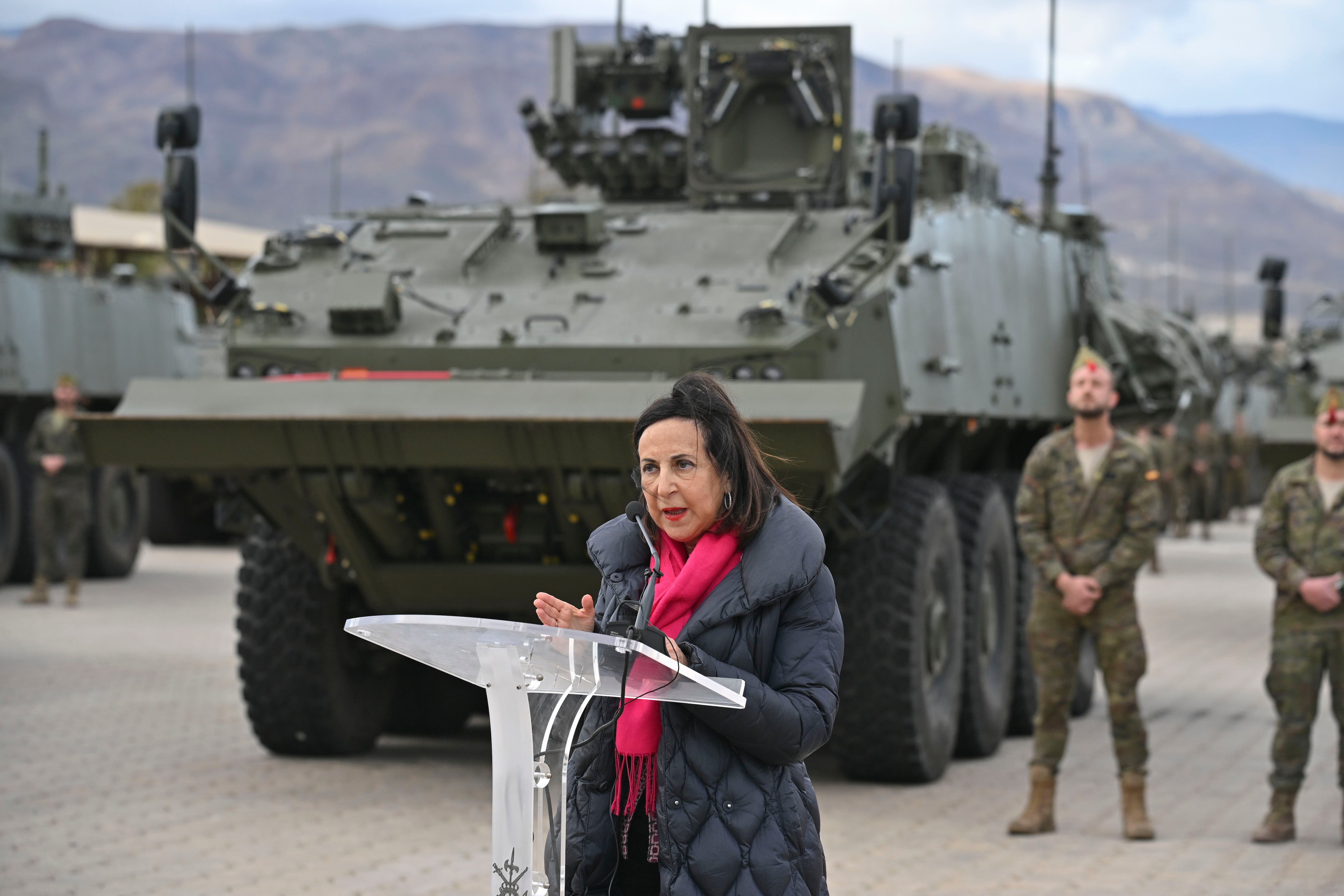
The latest movements in the sector in Spain show how, in addition, an association with similar European companies is sought, which would point to the replacement of those controlled by the United States. The confrontation between Indra-Escribano and Santa Bárbara also hinders the development of TESS Defense, the joint project to manufacture the 8×8 Dragón wheeled armored vehicle, which has a huge contract to fulfill with the Spanish Army. This explains why Indra is already holding talks with the German company Rheinmetall (manufacturer of the Leopard tank) and the Italian company Leonardo, companies that signed an alliance a year ago for the development of new combat tanks.
Therefore, Trump’s pressure on Europe and, particularly on Spain, to increase defense spending, but, above all, to buy weapons from them, is having an impact that is surely not what was expected. The transformation of the United States from a partner to a threat for Europe has spurred investment in defense, but it is also forcing the creation of large European companies and alliances between competitors and, as can be seen, to dissociate themselves from American technology to the extent possible.
However, although Spain is somewhat immune to Trump’s tariffs, it needs to maintain good friendship with the United States to keep the security relationship oiled, given its brutal global influence and especially over Morocco, the southern border of Spain and Europe. All this apart from what, at least until now, the membership of both countries in NATO implies.
It has been a year since Donald Trump’s second term began and it is unpredictable how it will end. His boldness has led him to say that he is doing so well that there may not be a need for midterm elections in November. These types of assertions, added to the assault on Venezuela and the threat to take Greenland, have led other international leaders to begin to abandon the complacent and good-natured language with Trump, to use thicker words.
Canada’s Prime Minister Mark Carney, who should be the most fearful of being a frontier, is turning out to be the toughest and most inspiring. His speech in Davos, highly critical of Trump’s lack of principles, won widespread applause. “The rules-based order is fading. The sturdy do what they’ll and the weak endure what they need to. And, within the face of this logic, there’s a sturdy tendency for international locations to appease as a way to get alongside. To adapt. To keep away from issues. To hope that docility ensures safety. We now not rely solely on the energy of our values, but in addition on the worth of our energy. We are going to double our protection spending by 2030 and we’re doing it in a method that strengthens our industries nationwide”. You do not need to wrinkle. As Carney says: “The middle powers must act together because, if you are not at the table, you are on the menu.”
https://cincodias.elpais.com/opinion/2026-01-23/el-disparado-deficit-con-ee-uu-y-la-estrategia-en-industria-militar.html