
The Supreme Court establishes that the four-day depart for household emergencies should be paid | Economy | EUROtoday
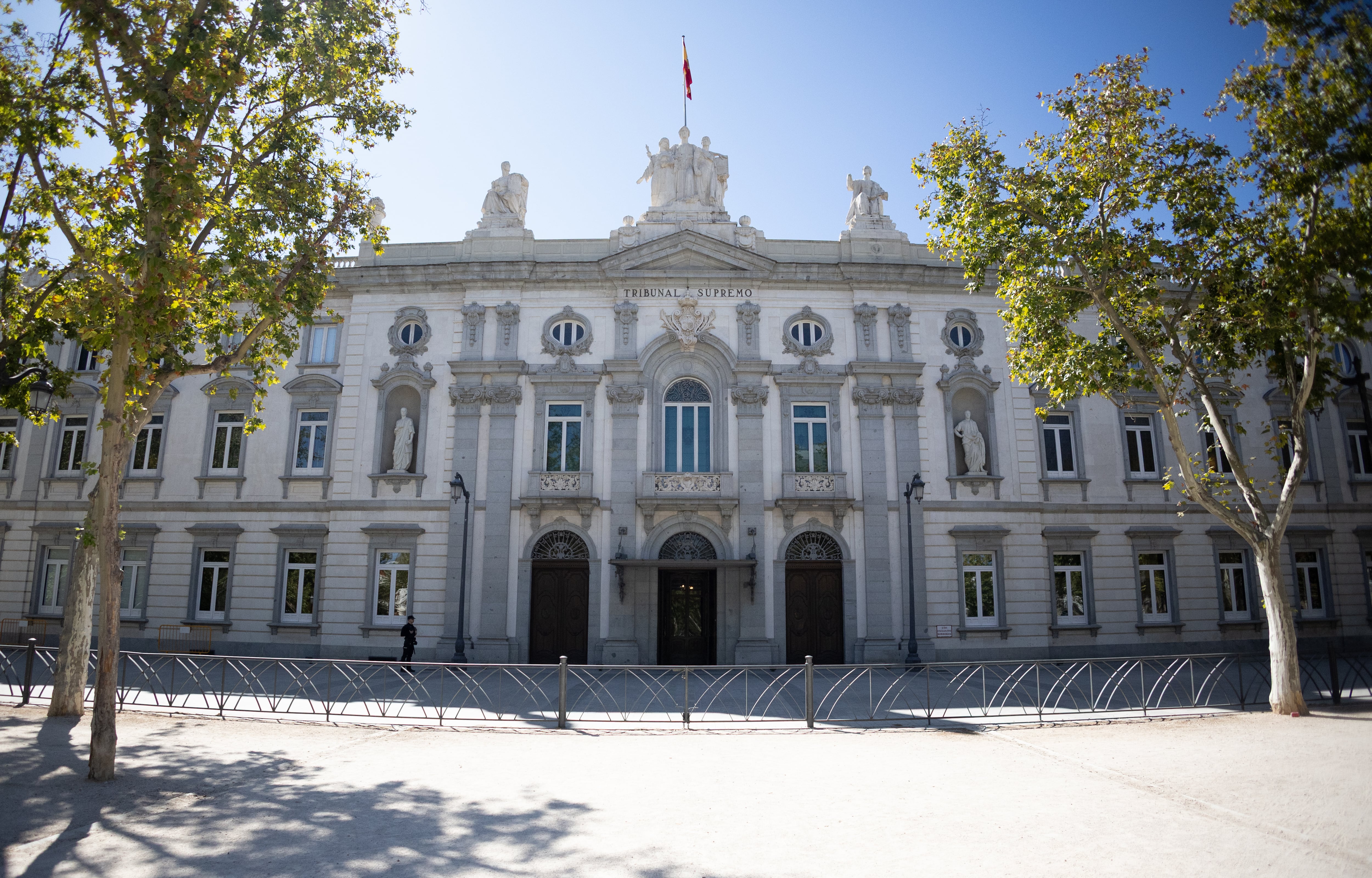
The Supreme Court has settled the talk on whether or not depart as a consequence of household pressure majeure must be paid by firms. The Social Chamber has established that absences for pressing household causes of as much as 4 days a yr should be paid as a “legal imperative”, though neither the collective settlement nor an organization settlement expressly gives for it.
The Government accepted this allow in June 2023, throughout the framework of the transposition of the European directive on work-life stability. Among different measures, the Council of Ministers gave the inexperienced gentle to the introduction within the Workers’ Statute of the precise to be absent from work for as much as 4 days a yr to take care of critical or unforeseeable conditions associated to a member of the family or cohabitant. This is a allow aside from 5 days to take care of a member of the family as a consequence of hospitalization or surgical procedure.
The matter has reached the Supreme Court following an enchantment by an organization within the customer support sector., who appealed a ruling by the National Court issued in February 2024 that required him to pay for these permits. The litigation started with the collective battle calls for of a number of unions towards the corporate’s resolution to not pay nowadays of absence, understanding that it was not needed if the settlement didn’t point out it.
In a ruling handed down on April 17, the Supreme Court has absolutely confirmed the factors of the National Court. According to the judges of the Social Chamber, who’ve established doctrine, there isn’t any doubt concerning the interpretation of the provisions of article 37.9 of the Workers’ Statute, which states that “workers will have the right to be paid for the hours of absences” as a consequence of unexpected causes.
The courtroom affirms that with such a “categorical and resounding” assertion within the statute, “it is indicating that the leave must necessarily be paid up to that time limit.” [cuatro días]whose grammatical interpretation, in response to the correct which means of these phrases, doesn’t admit some other chance than that of understanding that the permission should be paid.”
In this sense, the Chamber points out that the norm refers to the fact that this permit is introduced to comply with European law, “with out prejudice to what collective agreements could set up on this regard.” However, this does not mean that the permit is at the expense of the business or agreed will, says the court, but rather that it is “a legal minimum of paid hours.” In fact, it highlights that the legislator wanted to go this “beyond” that is required by the European directive itself to capture “the need to compensate” for this justified absence.
Furthermore, the Supreme Court remembers that the target of the allow is to advertise conciliation and assure “real equality in the field of labor relations through the implementation of measures that promote co-responsibility (…) with greater involvement of men in the assumption of family responsibilities that mostly rest on women.”
https://elpais.com/economia/2026-04-30/el-supremo-fija-que-el-permiso-de-cuatro-dias-por-urgencias-familiares-debe-retribuirse.html